The Rise of AI Superhumans: Will Robots Replace Human Intelligence?

 Opening:


Artificial intelligence, or AI, is one of the most exciting technological innovations of the 21st century. The ability of machines to simulate human intelligence has created countless opportunities for businesses, governments, and individuals. From enhancing productivity and reducing costs to revolutionizing healthcare and education, AI is changing the world in ways we could never have imagined just a few decades ago. In this blog post, we’ll explore the potential of AI and how it’s being used to transform different industries.

Artificial intelligence, or AI, has become a buzzword in recent years. It is a field of computer science that involves the development of algorithms and computer programs that can mimic human intelligence. AI has found its way into various industries, from healthcare to finance, education, and even entertainment. The technology has already made significant contributions to various fields, and it’s continuing to grow at a rapid pace. In this blog post, we’ll take a closer look at AI and explore how it is shaping the world.


Body:


Enhancing Productivity:


AI is being used to automate routine tasks, allowing people to focus on more important tasks. For example, chatbots are becoming increasingly popular in customer service, helping to answer simple queries and providing 24/7 support. AI is also being used in manufacturing to improve efficiency and reduce errors.


Reducing Costs:

 By automating tasks, AI is reducing the need for human labor, which is driving down costs. In finance, for example, AI is being used to automate tasks such as fraud detection, reducing the need for expensive human analysts.

AI has made significant contributions in the financial sector, where it’s used for fraud detection, loan underwriting, and financial analysis. With AI, banks can detect fraudulent transactions in real-time, leading to a reduction in losses. AI can also be used for loan underwriting, where it can analyze credit scores, income, and other factors to determine the risk of lending to a borrower.


Revolutionizing Healthcare:


AI is transforming the healthcare industry by enabling doctors to diagnose diseases and develop treatment plans more accurately and efficiently. It’s also helping to improve patient outcomes by providing personalized medicine and reducing errors in treatment.


Transforming Education:


 AI is being used to personalize learning and provide students with a more immersive experience. For example, virtual reality is being used to create interactive learning environments, and chatbots are being used to provide instant feedback and support to students.


AI in Entertainment:


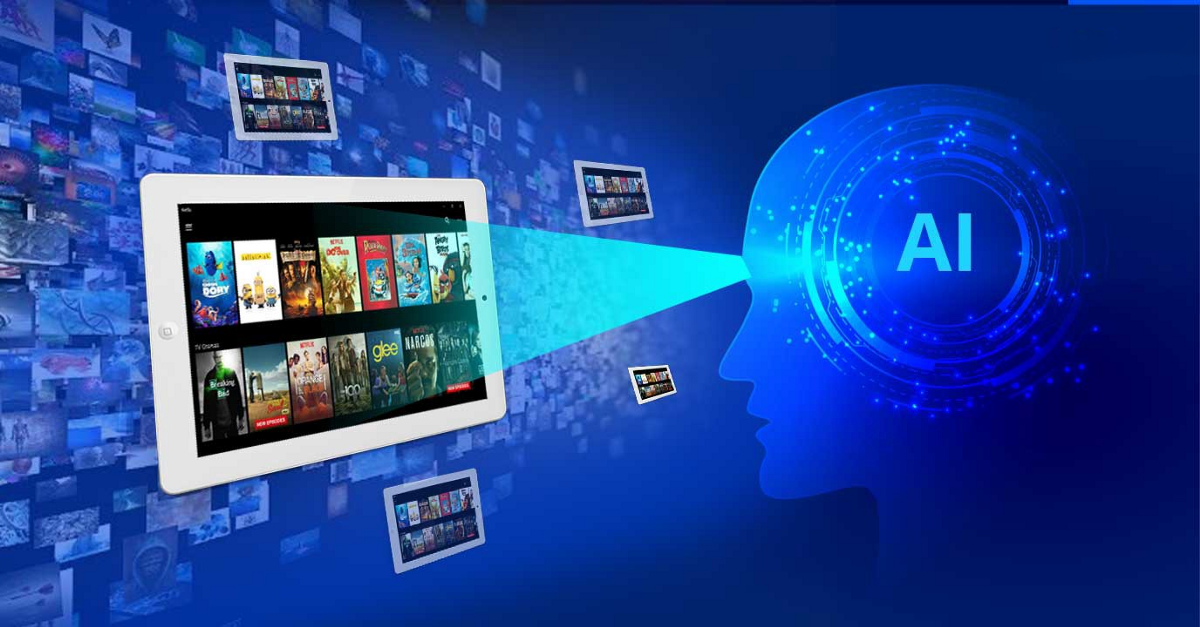
AI has also made its way into the entertainment industry, where it’s used to generate content, such as music, movies, and TV shows. For instance, AI-powered algorithms can analyze data on a user’s music preferences to recommend new songs or artists that they might like. Similarly, AI can also be used to generate script ideas, making it easier for producers to create new content.


The Future of AI:


AI has already made significant contributions in various industries, and it’s only expected to grow further. As the technology improves, it will be able to tackle more complex problems, leading to more accurate predictions and diagnoses. For instance, in the field of climate change, AI can be used to analyze data from sensors placed in different parts of the world, leading to more accurate predictions of weather patterns.


AI
has also found its way into the field of robotics, where it’s used to create autonomous robots that can perform tasks such as cleaning, delivery, and even surgery. With advancements in AI, robots will be able to perform more complex tasks, leading to a reduction in labor costs and increased efficiency.

However, as AI continues to grow, it also raises ethical concerns. For instance, some fear that AI-powered robots will replace human workers, leading to job losses. Additionally, there are also concerns about the use of AI in surveillance and the potential for it to be misused.

Conclusion:


The potential of AI is enormous, and we’re only just scratching the surface of what it can do. From automating routine tasks to revolutionizing healthcare and education, AI is changing the world in ways that we could never have imagined just a few decades ago. As AI continues to evolve, we can expect to see even more exciting developments in the coming years. The future of AI is bright, and it’s up to us to harness its power for the greater good.

Comments

Popular posts from this blog

Exploring the Leadership and Legacy of Narendra Modi: A Visionary Leader of Modern India

 Narendra Modi is the current Prime Minister of India and a towering political figure in the country. Born on September 17, 1950, in Vadnagar, Gujarat, Modi is known for his charismatic leadership and bold policies that have transformed India in recent years. Modi’s early life was marked by poverty and struggle. He worked as a tea-seller during his youth to support his family. However, he was a bright student and had a keen interest in politics from a young age. In 1971, he joined the Rashtriya Swayamsevak Sangh (RSS), a right-wing Hindu nationalist organization, and started working for its student wing, the Akhil Bharatiya Vidyarthi Parishad (ABVP). Modi’s rise to power began in the 1980s when he became involved in the Bharatiya Janata Party (BJP). He quickly rose through the ranks of the party and became the Chief Minister of Gujarat in 2001. During his tenure as Chief Minister, Modi implemented a series of reforms that transformed Gujarat into one of India’s most prosperous and ...

The Indian Premier League (IPL) - A Game-Changing Phenomenon in Cricket

  The Indian Premier League (IPL) is a professional Twenty20 cricket league in India. It was founded in 2007 by the Board of Control for Cricket in India (BCCI) with the aim of bringing a new era of entertainment to the game of cricket. The league has become one of the most popular and lucrative sporting events in the world, attracting players from all over the globe. The IPL is played annually during the months of April and May, featuring eight teams representing different cities in India. The teams are owned by prominent business people, Bollywood celebrities and media houses, making the league a perfect blend of cricket and entertainment. The IPL has revolutionized cricket in many ways. Firstly, it has brought a new level of professionalism to the sport. With the involvement of high-profile team owners, the league has become a platform for showcasing talent and skills, making it attractive for young cricketers. It has given a chance to many aspiring cricketers to showcase their...

Understanding 5G Technology: What it is, How it Works, and What it Means for the Future?

 Introduction: In recent years, 5G technology has been a hot topic in the tech industry, promising to deliver faster speeds, lower latency, and better connectivity. With 5G networks rolling out across the globe, it's set to revolutionize the way we live and work, enabling new applications and services that were once impossible. In this blog, we'll explore what 5G technology is, its benefits, and its potential impact on different industries. What is 5G Technology? 5G stands for the fifth generation of wireless technology, which is the successor to 4G LTE. Unlike its predecessor, 5G technology operates on higher frequency bands, which can deliver faster speeds and lower latency. This allows for a more reliable and responsive network, which can support new applications and services such as autonomous vehicles, remote healthcare, and smart cities. How Does 5G Technology Work? Unlike 4G, which uses lower frequency bands, 5G uses higher frequency bands that have more bandwidth ava...